
Teardrop Indent Screens
The heart of every length grader. Our teardrop indents pack more pockets into every screen — for higher capacity, less choking and sharper grading.
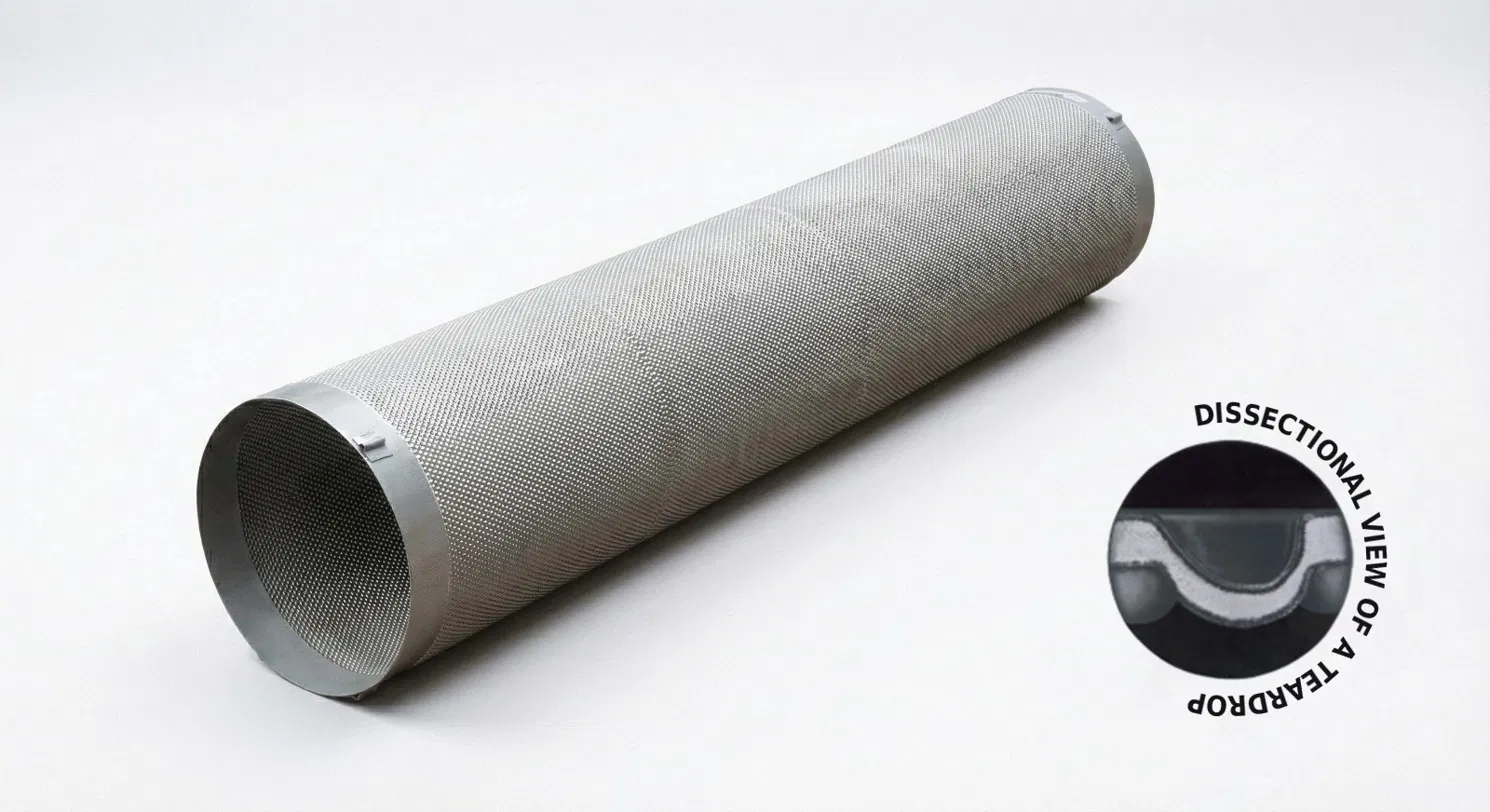
What does an indent screen do?
An indent screen is the rotating cylinder inside a length grader. Its surface is pressed with thousands of small pockets, called indents.
As the cylinder turns, short and broken grains settle into the pockets and are lifted into a collecting trough. Full-length grains are too long to sit in the pockets, so they slide out separately.
The shape of each pocket decides how accurate and how fast your grading is. That is where teardrop technology makes the difference.
Rice enters the cylinder
Polished rice feeds into the rotating indent screen.
Broken grains sit in the indents
Short grains fall into the pockets and lift into the trough.
Whole grains flow out
Full-length grains slide along and discharge cleanly.
Same cylinder. Smarter pocket.
We made round indent screens for decades. After 2020 we moved to teardrop technology — here is why.
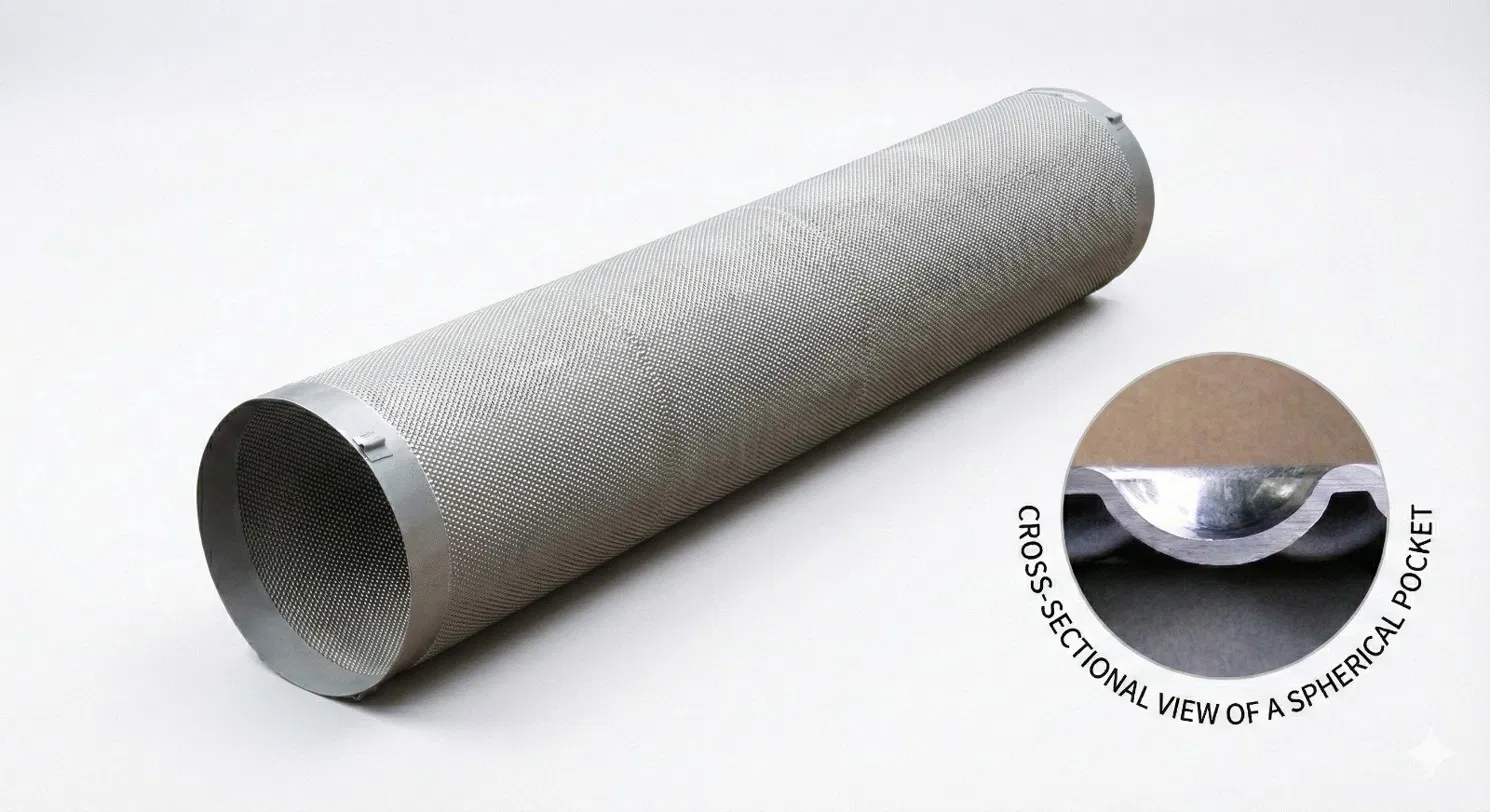
Spherical (round) indents
A round, bowl-shaped pocket. Reliable, but the round shape needs more space between pockets.
Teardrop indents
An elongated, teardrop-shaped pocket with minimal pitch between indents — matching international standards.
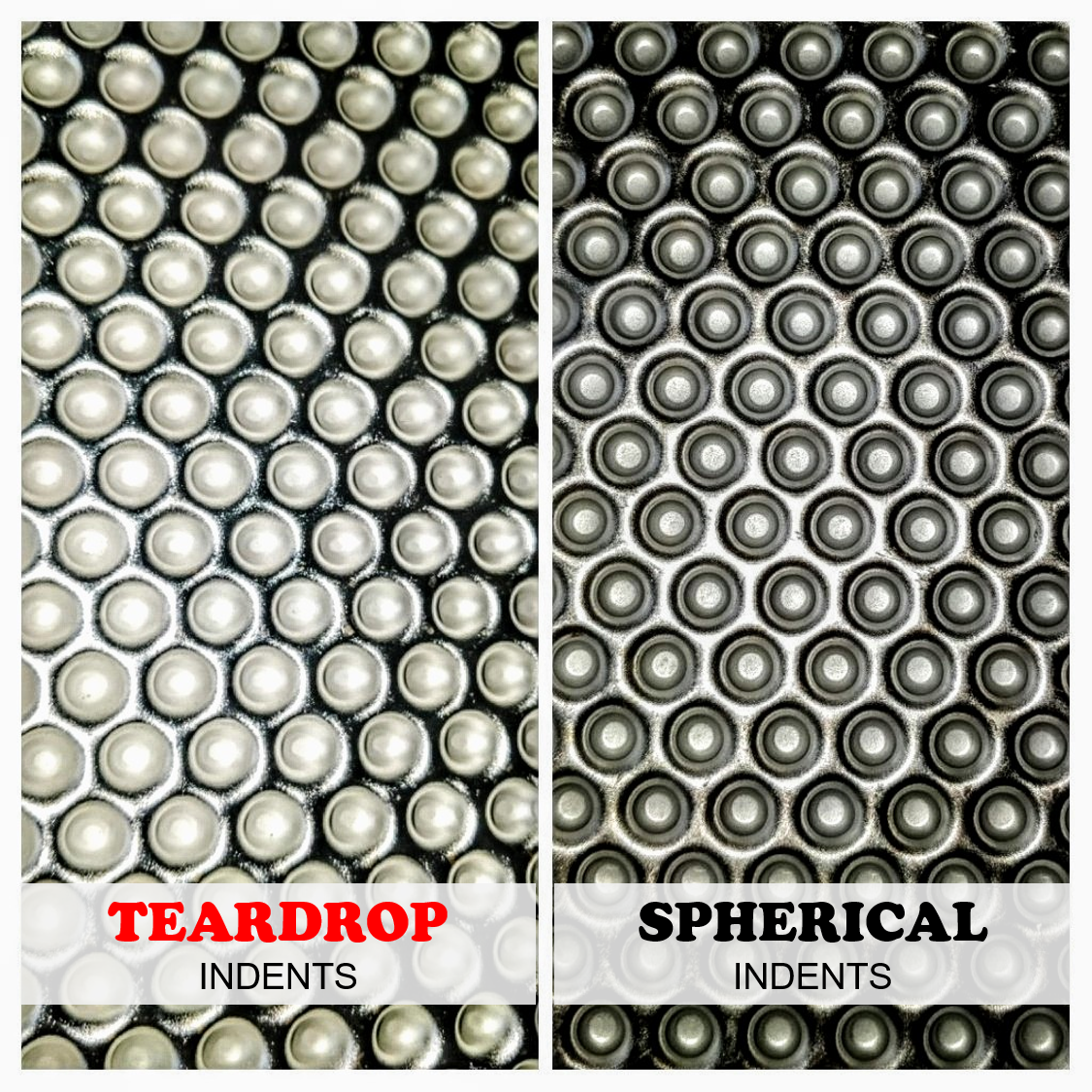
25–35% more indents in the same space.
Teardrop pockets nest closer together than round ones. More pockets on every rotation means more broken grains captured — and more rice graded per hour from the same machine.
Why mills switch to teardrop.
International-grade grading performance, built and serviced from Agra.
Talk to an engineer25–35% more indents
Compared with a round-type indent screen of the same size.
15–20% higher capacity
Grade more rice per hour from the same grader.
Up to 75% less choking
Grains release cleanly, so screens (jali) stay open longer.
International-standard shape
Indent geometry on par with leading international screens.
Low maintenance cost
Less cleaning, less downtime, longer screen life.
1/3rd the cost
Compared with international grader brands.
Made to suit your rice.
Choose the indent size for your rice variety and grading target.
Tempered for wear resistance and the longest screen life.
Zero maintenance and no choking.
Upgrade your grader to teardrop screens.
Tell us your grader model, cylinder size and rice variety. We'll confirm the right screen.